

DC neighborhoods significantly vary in their architecture and history. So get off the National Mall. You’ll discover there is more to DC than the monuments, memorials, and Smithsonian museums.
“Locals know the difference between Washington and DC. The latter is a city made up of neighborhoods . . .”—Destination DC

You will find the real DC is an old chili bowl shop on U Street, a Depression-era movie theater in Cleveland Park, a Jesuit garden in Brookland, a 12-foot-tall giraffe sculpture in Capitol Hill, and a 19th-century “skyscraper” (the Cairo) in Dupont Circle.
Table of Contents
DMV Native
I have lived in Washington, D.C. for the last decade. However, I grew up in the DMV region (which encompasses Washington D.C. and the surrounding suburbs in Maryland and Virginia) for my entire life.
My recommendation is to visit Washington, D.C. during the spring or fall when the temperatures are optimal. But if you can only visit during your kids’ summer vacation, you should expect the city to be hot and muggy. It is tough to stay energized when the temperature rises above 90 degrees!
Three-Day Itinerary
I created a three-day itinerary to visit nine special DC neighborhoods. To maximize your travel time, try to eat all three daily meals at different neighborhood restaurants. I also encourage you to stay up late one night to attend a concert or visit a music venue.
DC is one of the most walkable cities in the United States, but you’ll need comfortable walking shoes. You’ll walk a minimum of five to seven miles a day on my self-guided DC neighborhood tour.
Fortunately, adidas offered to send me a pair of cross trainers, which provided stability and comfort on the long strolls in DC neighborhoods. They also provided ample arch support. If you get blisters on your feet from wearing uncomfortable shoes or your knees ache from wearing high heels, you will give up on day one. Don’t ruin your vacation in DC by wearing the wrong footwear!
I will feature DC neighborhoods adjacent to the National Mall for my three-day itinerary, because I assume you want to visit the National Mall first. Although many tourists never venture beyond the National Mall, I recommend that you discover DC’s vibrant neighborhoods.
Capitol Hill
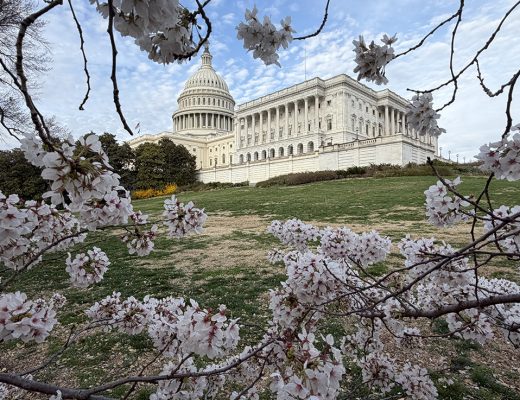
If you trek up to the end of the National Mall to visit the U.S. Capitol and Library of Congress, you’ve reached Capitol Hill. This historic neighborhood is home to centuries-old townhouses, alleyways, and parks. I recommend eating in their cafeterias. Check their website for hours of operation.
After breakfast, I suggest you tour the Library of Congress (LOC). Founded in 1800, the Library of Congress is the oldest federal cultural institution in the United States. Initially, the library was housed in the new U.S. Capitol. The initial collection consisted of 740 books and three maps.

But during the War of 1812, British troops burned the U.S. Capitol on August 24, 1814. It would take 83 years before the new building would open.
The Library of Congress comprises four buildings. The oldest is the Thomas Jefferson Building, located on First Street SE between Independence Avenue and East Capitol Street. Its entrance faces the U.S. Capitol. The U.S. Supreme Court is located to the right of this building. In 1965, it was designated a National Historic Landmark.
The LOC offers a free audio guide to the library and the Thomas Jefferson Building. It includes information on the Great Hall, the Gutenberg Bible and Written Word Gallery, the Librarian’s Ceremonial Office, the Librarians’ Wall, the Minerva Mosaic, Art & Science on the Mezzanine, the Founding of the Library of Congress, Thomas Jefferson’s library, and the Main Reading Room Overlook.
Penn Quarter & Chinatown
This dynamic area is one of the entertainment centers for Washington, D.C., because it is home to the Capital One Arena. Sports fans will instantly recognize the neighborhood from close-ups of ecstatic fans cheering when the Washington Capitals became the Stanley Cup champions in 2018.
However, the neighborhood is also one of the first in DC not to be destroyed by the wrecking ball, thanks to historic preservation efforts in the 1970s. Penn Quarter’s revitalization began in the early 1970s with the creation of the Pennsylvania Avenue Development Corporation by the U.S. Congress. This spurred the neighborhood’s housing and retail development as well as the preservation of historic buildings.
I recommend you visit Penn Quarter around lunchtime. You can choose between four popular restaurants run by acclaimed chef Jose Andres—China Chilcano, Jaleo, Oyamel, or Zaytinya.
You should also visit the National Portrait Gallery and Smithsonian American Art Museum (SAAM), which have been jointly housed in the old U.S. Patent Building since 1968. Both museums regularly host special exhibitions, such as “Her Story: A Century of Women Writers.”

They are two different museums. Book a free docent-led walking tour to learn more about the historic Greek Revival building and its collection. Currently, one-hour tours are offered daily at 12:00 p.m. and 2:30 p.m.; please check the website for updates.
The Presidential portraits are a favorite for visitors. “The nation’s only complete collection of presidential portraits outside the White House, this exhibition lies at the heart of the Portrait Gallery’s mission to tell the American story through the individuals who have shaped it,” according to the museum.
TIP: Check out First Lady Michelle Obama’s portrait, Adams Memorial (Augustus Saint-Gaudens), and Lexington (horse portrait).
The Wharf
The Wharf in Southwest Washington is a popular destination for visitors, offering waterfront hotels, the Municipal Fish Market, a wharf jitney, kayak and paddleboard rentals for exploring the Potomac River, and live concerts at The Anthem, Union Stage, and Pearl Street Warehouse.

Year-round, they can also enjoy major events such as Mardi Gras, Rock the Dock, and Oktoberfest.
The slogan for The Wharf is “where DC meets its water.”
One of the best things to do if you have kids in tow is to take a walk on the wild side. You’ll find oversized swings for the whole family to ride. The kids can also splash in the fountain at the 7th Street Park.
A fun idea for dinner is to book a cruise, such as the Odyssey or Spirit of Washington. You can watch the sun set as your cruise ship sails up the river.
Logan Circle
On Day 2, you’ll leave the National Mall and explore historic neighborhoods built in the late 1800s. You’re going to fall in love with these villages within DC.

Time travelers should head straight for the Logan Circle neighborhood of Washington, DC, if they want to be transported back to the late 19th century. Most of the homes on Logan Circle were built during a 25-year period from 1875 to 1900.
You’ll feel dizzy if you try to jog around the Logan (traffic) Circle while looking up to examine the Logan Circle homes. The houses are so tall!
This is a great place to eat breakfast, then take a walk around the circle to get your steps in. Grab some croissants and takeout coffee, and head for Logan Circle. You are now in the “heart” of this neighborhood. It comprises a roundabout park with an equestrian statue of General John A. Logan.

You can then head for the Mary McLeod Bethune Council House. An activist and educator, Bethune was one of the most prominent African American residents to move to Logan Circle.
The Council House was the first home of the National Council of Negro Women (NCNW). It was also Bethune’s last home in Washington, DC. Her residence is now a National Historic Site. The National Park Service offers free public tours of the house on Thursdays, Fridays, and Saturdays.
Embassy Row
If you love watching HBO’s The Gilded Age show, then you don’t want to miss a tour of Embassy Row. I highly suggest booking a walking tour, because you’ll want to learn about the history of all the famous occupants on Embassy Row.

Embassy Row astounds visitors and residents alike when they first see the palatial mansions that line several blocks on Massachusetts Avenue NW in Washington, DC. It is one of the most exclusive DC neighborhoods. You’ll see both the residences where the ambassador lives and the chanceries (embassy offices).
Gilded Age millionaires, such as miner-turned-millionaire Thomas Walsh, built the “Palaces of Massachusetts Avenue” to flaunt their wealth.
These turn-of-the-century residences now serve as the embassies for many nations, including Brazil, the United Kingdom, Haiti, Latvia, Pakistan, and Uzbekistan.
Foreign countries began snapping up properties after the 1929 Stock Market Crash, and the ensuing Depression took a toll on family fortunes. Millionaires’ Row turned into Massachusetts Avenue’s famed Embassy Row.

You might want to tour the Anderson House. Architects Arthur Little and Herbert W. C. Browne designed the 1905 Beaux-Arts style mansion for American diplomat Larz Anderson as a winter home.
When Larz died in 1937, his widow donated the house and its furnishings to the Society of the Cincinnati, of which her husband was a member for 40 years. Today, the Society of the Cincinnati uses the Anderson House for its headquarters, library, and museum. In 1996, it was designated a National Historic Landmark.
Dupont Circle
DC’s Dupont Circle neighborhood is eclectic. Its architecture spans the Gilded Age of the robber barons to trendy 21st-century condo renovations. It’s a little like visiting your eccentric Great Aunt Matilda. Some things seem a tad outdated and moldy. But it’s also a real community—home to independent retailers, restaurants, bookstores, tea stores, galleries, Tarot card spiritualists, and a farmers market.

If you are looking for a whirlwind DC weekend, and your budget doesn’t stretch to a stay at the Four Seasons hotel in Georgetown, consider Dupont Circle. It’s a personality-plus type of place.
Many of the neighborhood’s elegant homes and former apartment buildings are listed on the National Register of Historic Places. These residences have been converted into condos, inns, and galleries. You will see some of the most distinguished edifices. The late 19th-century architectural styles, such as Queen Anne and Romanesque, dominate, along with the 20th-century Revival styles.
Dupont Circle is also a walker’s dream. You get off the Dupont Circle metro station and are plunged into city life. Wander down Q Street NW and marvel at regal row houses.

You can experience 1890s life in DC’s Dupont Circle neighborhood when you visit the “Brewmaster’s Castle” on New Hampshire Avenue. The Heurich House Museum offers daily tours of the house. You’ll learn about its original owner German immigrant Christian Heurich. The museum bills itself as the “Historic Dupont Circle brewmaster’s castle.”
Brookland
Brookland is a DC neighborhood often referred to as “Little Rome.” It earned this moniker decades ago because the Catholic University of America and the Basilica of the National Shrine of the Immaculate Conception are located here.

However, the neighborhood is named after Colonel Jehiel Brooks, who owned a farm in the area during the 19th century. After he died in 1886, developers began building homes. There are excellent examples of Queen Anne architecture that date back to the 1890s.
With its wide streets, open spaces, century-old residences, and kids riding bikes, Brookland could be mistaken for a town in the suburbs. But the neighborhood is located less than four miles from the U.S. Capitol (via North Capitol St NW).

One of my favorite places to visit in Brookland is the Franciscan Monastery of the Holy Land in America. It is located at 1400 Quincy Street. It indeed offers an oasis for both local residents and travelers to Washington, D.C.
The monastery offers free guided tours of the church and its catacombs as well as seasonal garden tours.
Cleveland Park
If you’re looking for a peaceful escape from the hustle and bustle of the city, look no further than Cleveland Park. This historic D.C. neighborhood in the northwest quadrant of Washington, D.C. is a true gem, offering a mix of stunning architecture, abundant greenery, and vibrant local culture.
Cleveland Park is an intact neighborhood wedged between Wisconsin and Connecticut Avenues. Washingtonians used it as a summer escape back in the 19th century.

As one of the highest areas in DC, Cleveland Park boasts a more rugged topography, characterized by winding streets. The land slopes down toward the commercial development on Connecticut Avenue. You can trek parkland and ravines in the Klingle Valley and Melvin Hazen Park.
When you stroll through Cleveland Park, you immediately notice the bucolic design. Rather than linear ruler-straight thoroughfares, many of Cleveland Park’s streets are designed to follow the natural contours of the land. You glide along curving paths, inviting you to linger and take in the stately trees. Even the house rooflines seem to create a “river” that flows like the streets below.
If you’re a nature lover, Cleveland Park has plenty to offer as well. The neighborhood is home to several parks and green spaces, including the 1,754-acre Rock Creek Park, which offers hiking trails, picnic areas, and a nature center. Melvin C. Hazen Park, situated in the heart of Cleveland Park, is a serene, tree-lined oasis that’s ideal for a relaxing afternoon.

Another must-see in Cleveland Park is the Washington National Cathedral, located just a short walk from the neighborhood’s eastern border. The Cathedral is a stunning work of Gothic Revival architecture and is the sixth-largest cathedral in the world. Visitors can take guided tours of the Cathedral and enjoy breathtaking views of the city from its observation deck.
Georgetown
Your self-guided tour of nine D.C. neighborhoods will end in Georgetown. If you’re lucky enough to book a Georgetown hotel, you’ll probably roam the streets each night. Georgetown is famous for its bars and nightlife.

One of the neighborhood’s slogans for Georgetown is “A Story in Every Brick.” You better believe it! It is not certain who was “George” in George Town. Naturally, it is presumed to be George Washington, but Georgetown’s founding preceded George’s nomination as our first U.S. president. It could have been named for King George or the two men named George who sold land. (George Beall and George Gordon owned the 60-acre tract.)
Georgetown preceded the creation of the nation’s capital as it was formally established in 1751 when the Maryland Assembly authorized a town on the Potomac River. This convoluted tale perfectly captures the history of this town, perched on the Potomac, that presidents, poets, and muckraking journalists have called home.
Georgetown is a beehive of streets running parallel to M Street and crisscrossing Wisconsin Avenue. Multi-storied rowhouses are dressed in pink, yellow, blue, and green doors. Georgetown architecture dates back to the 16th century. A particular thrill is to stumble on a “half” street. Slum housing condemned in 1935 under the Alley Clearing Act has been redeveloped into bakeries, shops, and bars.

But you don’t have to spend a lot of money to enjoy Georgetown’s waterfront. Early morning brings out the joggers en route to Rock Creek Park via Georgetown and the C&O Canal. You can picnic for free on the ample parklands that overlook Arlington and the Kennedy Center. My favorite “secret side of DC” is to show visitors the Labyrinth on the water’s edge. It begs you to spend time in quiet contemplation.
Walking Tours
When friends and relatives visit me in DC, I always encourage them to spend at least two days exploring DC neighborhoods. They are loaned copies of my favorite guidebooks so they can research areas to visit.
I also encourage them to take a DC walking tour on their first day, as I am a big fan of DC’s walking tour companies. I can recommend Washington Walks, DC Design Tours, and A Tour of Her Own. Currently, a walking tour with these companies costs between $35 and $40. A tour will run 90 minutes to two hours. The owners of these companies typically limit their groups to 15 participants.
If you prefer the pay-as-you-go model, you can book a walking tour with Free Tours by Foot. You “tip” your guide at the end of the tour based on what you think it is worth.
Finally, you can subscribe to the GPSmyCity app. It offers self-guided tours around the world. You can download the app for free. However, you will need to pay an annual fee to access the GPS-guided walking tours and offline maps.
You can also find multiple FemaleSoloTrek travel articles published on the GPSmyCity app, such as my Dupont Circle neighborhood guide. The articles were published as part of their Insider Tips. Each of the venues mentioned in the article can be mapped along the route.
FAQs
How long does it take to visit all nine Washington, DC neighborhoods?
Most visitors can explore all nine neighborhoods over two days, allowing time to visit attractions, browse local shops, enjoy meals, and admire the architecture at a relaxed pace.
Which neighborhoods are included in this two-day walking tour?
The itinerary includes some of Washington, DC’s most distinctive neighborhoods, each offering its own blend of historic landmarks, colorful row houses, parks, public art, local restaurants, and independent shops.
Do I need a car for this itinerary?
No. This itinerary is designed for walking, with short rides on the Metro or DC Circulator (where available) to connect neighborhoods when needed.
What should I wear for a walking tour of Washington, DC?
Wear comfortable walking shoes, dress for the weather, and bring a reusable water bottle, sunscreen, and a light rain jacket if rain is in the forecast.
When is the best time of year to explore Washington, DC neighborhoods?
Spring and fall offer the most comfortable temperatures and beautiful scenery, while summer provides longer daylight hours and lively outdoor events.
Are the neighborhoods free to explore?
Yes. Walking through the neighborhoods is free, and many parks, gardens, public art installations, historic sites, and museums along the route also offer free admission.
Can I shorten the itinerary?
Absolutely. Each neighborhood can be explored on its own, making it easy to customize the itinerary based on your interests and available time.
Which neighborhood is best for first-time visitors?
If you’re visiting for the first time, Georgetown, Dupont Circle, and Embassy Row are excellent places to start because they combine historic architecture, vibrant streets, restaurants, and iconic landmarks.
Final Thoughts
Washington, DC’s neighborhoods each tell a different story, from the grand embassies of Embassy Row to the historic streets of Georgetown and Dupont Circle. Spending two days exploring these vibrant communities gives you a deeper appreciation of the city’s history, architecture, public art, local businesses, and diverse culture. Whether it’s your first visit or your tenth, wandering beyond the National Mall is one of the best ways to experience the authentic character of the nation’s capital.



24 Comments
Loredana
July 19, 2025 at 12:49 pmA comprehensive presentation. I love the houses in Logan Circle! And Cleveland Park looks amazing!
Terri
July 28, 2025 at 11:28 amThe houses on Logan Circle are amazing. I love to walk by dog in this neighborhood and stare at the houses.
Angie Lowe
July 19, 2025 at 1:00 pmI love DC. I did a walking ghost tours once and it was wonderful. My favorite areas are Embassy Row and Logan Circle for architecture, so i was glad you mentioned them.
Terri
July 26, 2025 at 6:47 pmI bet a ghost tour in Georgetown would be fun! Architect buffs love to visit the different DC neighborhoods. I frequently write about DC.
Sonia
July 19, 2025 at 3:32 pmI’ve always enjoyed our DC visits, though I realize we haven’t taken advantage of the Potomac. It would be a lot of fun to take out a paddle board or listen to one of the open air concerts.
Terri
July 26, 2025 at 6:47 pmYou absolutely should take advantage of the Potomac River – rent a paddleboat, take a cruise from Georgetown, or just walk along the Potomac.
Rachel - Rays of Adventure
July 19, 2025 at 5:10 pmThis is a great guide to parts of DC I’ve never heard of before. It looks like there are some great things to do.
Terri
July 26, 2025 at 6:46 pmI hope you get to visit DC one day.
Catarina Vieira
July 19, 2025 at 7:40 pmSuch a comprehensive and interesting itinerary! I had never heard of most of these places, and it was great to learn more about them.
Terri
July 26, 2025 at 6:46 pmThank you!
Maggie
July 19, 2025 at 8:19 pmI love this, what an unusual idea for a DC itinerary! For breakfast on Capitol Hill though, Jimmy T’s is the place to go – it’s been there for decades, still only takes cash, but has great food.
Terri
July 26, 2025 at 6:46 pmI must try Jimmy T’s. I wonder if I can bring my dog and eat on the patio?
Emily
July 19, 2025 at 10:18 pmFab post! DC is one of the cities in the US that I have not visited but really want to. I’ve heard such great things about it. I love the variety of options you’ve provided here. As someone who loves exploring cities, it’s perfect for me. The architecture in particular looks gorgeous.
Terri
July 26, 2025 at 6:45 pmWashington DC is truly a wonderful city. But I am biased. It is my hometown. I always encourage people to get off the National Mall and explore the neighborhoods.
Shweta
July 19, 2025 at 10:35 pmNever been to DC but this is a good guide to its different neighbourhoods. I enjoy urban parks and Cleveland Park looks great.
Terri
July 26, 2025 at 6:44 pmYes the neighborhood park in Cleveland Park is gorgeous. It has a mansion on the property. I particularly love to walk in the gardens in the spring.
Emma
July 20, 2025 at 1:22 amWhat a lot of different neighborhoods, all with their own unique charm. I like the look of Embassy Row, to ogle at the fancy mansions, and Logan Circle with its historic looking properties. A walking tour sounds like the best idea to get a real feel for the city
Terri
July 26, 2025 at 6:44 pmA walking tour with a professional guide will allow you to learn more about the architecture and the people who lived in the houses. I find it fascinating. You’d love both Embassy Row and Logan Circle.
Mohana
July 20, 2025 at 5:14 amI love exploring a city through its various neighbourhoods and areas. The subtle shift in the energy, the perspective of the residents, the personalities of these individual pockets of identities – all come together to make the city what it is. Beautiful, thanks for sharing!
Terri
July 28, 2025 at 11:27 amThank you! I love exploring cities too.
Lasma
July 20, 2025 at 8:01 amOh thank you for sharing all the local insights to DC! I certainly need to go back and explore all these gems. Thank you for this detailed DC guide, very useful!
Terri
July 26, 2025 at 6:43 pmI am always excited when people decide to go out and explore DC’s neighborhoods!
Patricia (Tish) Mikan
July 22, 2025 at 10:43 amBeautiful Architecture and History !
I agree with you to visit all
I still have to see the Monastery
Terri
July 26, 2025 at 6:42 pmThe Franciscan Monastery is extraordinary. I love walking in the gardens. I can even bring my dog.