

Denver rewards travelers who look above the storefronts. On my Denver Historic Architecture Tour, you’ll see ornate cornices, arched windows, carved stone, and glazed terra cotta. They reveal the city’s rapid growth. This self-guided walk begins at Denver Union Station. It passes through LoDo before continuing into Denver’s historic business district.

The route traces a larger architectural story. Victorian commercial buildings first reflected Denver’s mining wealth. Taller offices and headquarters later announced its arrival as a major western city. Allow about 90 minutes for the walk.
I created this self-guided Denver historic architecture tour the evening before boarding Amtrak’s California Zephyr to Glenwood Springs. With one night to explore downtown Denver, I wandered through LoDo and the historic financial district. The next morning, I traded city streets for mountain scenery aboard the California Zephyr train journey to Glenwood Springs.
Table of Contents
Denver Union Station
Begin outside Denver Union Station at 1701 Wynkoop Street. The present center section opened in 1914 after an earlier station burned. Architects Gove and Walsh designed the grand Beaux-Arts façade. Carved granite, pale terra cotta, monumental arches, and paired columns create a stately entrance. Look up at the red neon “Travel by Train” sign above the clock. It became one of Denver’s most familiar landmarks.

Step inside the Great Hall before starting the walk. Its soaring, 65-foot ceiling rests above tall arched windows and the original terrazzo floor. Thousands of plaster columbines decorate the arches. Three large chandeliers illuminate the room. Former ticket windows now serve the Terminal Bar. The Crawford Hotel, shops, and restaurants surround the hall. The lively space explains why locals call Union Station “Denver’s living room.”
Daniels & Fisher Tower
Walk southeast along 16th Street toward Arapahoe Street. The Daniels & Fisher Tower rises far above the surrounding blocks. Architect Frederick Sterner modeled the 1910 tower after St. Mark’s Campanile in Venice. Its pale shaft, arched observation level, pyramidal roof, and flagpole create a striking silhouette. The Italian Renaissance Revival tower originally crowned the Daniels & Fisher department store.

At 325 feet, the tower was once the tallest building between the Mississippi River and California. Four 16-foot clock faces helped shoppers track the time. A bell weighing more than two tons still hangs near the top. The department store was demolished in the 1970s, but preservationists saved the tower. Today, it stands alone as a dramatic reminder of Denver’s early commercial ambition.
Writer Square
Continue along 16th Street to Writer Square at Larimer Street. The red-brick complex opened in 1980, so it is not Victorian. However, its intimate scale creates a thoughtful transition into Larimer Square. Low buildings frame a network of passages, steps, terraces, and planted courtyards. The design invites pedestrians to wander rather than hurry through a single enclosed mall.

Notice how the brickwork responds to the older warehouses and storefronts nearby. Trees, benches, and changing levels soften the hard surfaces. Writer Square shows how late-20th-century planners sought to reconnect downtown with human-scale streets. Walk through the complex toward Larimer Street. The Victorian façades of Larimer Square soon come into view.
The Granite Building
Turn onto Larimer Street and look for the pink-and-gray Granite Building at 1460 Larimer Street. It also wraps around the corner to 1226–1228 15th Street. George and William Clayton commissioned the four-story building in 1882. It was first home to the M. J. McNamara Dry Goods Company. The site carries even deeper history. Denver’s first building, a log cabin, once stood here.

The façade offers a feast of Victorian detail. Rough-faced stone contrasts with smooth bands, carved panels, slender columns, and tall windows. A deep bracketed cornice casts strong shadows across the roofline. The building later became the Granite Hotel, then a boarding house. Its survival helped Larimer Square become Denver’s first local historic district. Cross 15th Street for the best full-façade photograph.
Denver Gas & Electric Building
Continue east along 15th Street to the Denver Gas & Electric Building at 910 15th Street. Harry W. J. Edbrooke designed the 10-story headquarters, completed in 1910. The building marks Denver’s transition from Victorian masonry blocks to early twentieth-century commercial towers. Its orderly window grid follows Chicago School principles. Yet its white glazed terra cotta gives the façade an unusually decorative finish.

Look closely at the arched top-floor windows, patterned tiles, and projecting cornice. The original company turned the entire exterior into an advertisement for electricity. About 13,000 light bulbs outlined the building after dark. The spectacle promoted a modern service through modern architecture. Also called the Public Service Building, it was added to the National Register of Historic Places in 1978.
First National Bank Building
The First National Bank Building stands at 818 17th Street in Denver’s historic financial district. Designed by architect Harry W. J. Edbrooke, the 1911 building reflects the Chicago School of architecture. Its tall windows, strong vertical lines, and decorative stonework emphasize the building’s impressive height. During the early 20th century, 17th Street earned the nickname “Wall Street of the West” as Denver’s banking industry flourished.

Look up to admire the building’s arched upper windows and restrained architectural ornamentation. The grand entrance and stone façade recall an era when banks used monumental architecture to convey wealth and stability. Today, the historic building houses the Magnolia Hotel Denver. Its preservation offers visitors a glimpse into Denver’s transformation from a frontier city into a major financial center.
Boston Building
Cross the intersection to the Boston Building at 828 17th Street. Architects Andrews, Jaques and Rantoul designed the nine-story office building in 1890. It was described at the time as Denver’s first strictly modern office building. Its scale feels bold, but the design still draws from the Victorian era. Rows of immense arches rise across a façade clad in deep red Manitou sandstone.

The building combines Renaissance Revival order with Richardsonian Romanesque weight. Rounded arches, thick masonry, carved bands, and clustered columns make the lower floors especially dramatic. The smaller arches near the roof lighten the composition. A late twentieth-century renovation converted the building into loft apartments. Its rich red surface remains one of the most photogenic façades on 17th Street.
Hotel Monaco and the Railway Exchange Buildings
Turn southeast onto Champa Street and stop at the Hotel Monaco. The hotel occupies two connected historic buildings. Fisher & Fisher designed the white terra-cotta Railway Exchange Addition at 1717 Champa Street in 1909. Regular window bays and strong vertical piers create a crisp commercial façade. Round medallions and classical details add elegance without hiding the building’s steel-age structure.

The adjoining New Railway Exchange Building replaced an older structure in 1937. Its streamlined limestone façade reflects the Art Moderne era. Both buildings later became the Title Building complex. They were restored and joined as Hotel Monaco in 1998. This stop makes a useful architectural comparison. The two façades show how Denver moved from ornate early skyscrapers toward cleaner modern lines.
Buerger Brothers Building
Finish at the Buerger Brothers Building at 1732 Champa Street. Montana Fallis designed this five-story Art Deco headquarters in 1929. Buerger Brothers supplied barbershops and beauty salons across the Rocky Mountain West. The company used the building for offices, displays, demonstrations, and storage. The original lettering still identifies its trade above the lower windows.

Cream-colored terra cotta covers the façade with geometric and floral patterns. Blue, green, and gold accents brighten stylized leaves, fans, and medallions. Slender vertical piers draw the eye upward, while the historic marquee anchors the entrance. The decoration turns a commercial warehouse into a work of art. It provides a colorful finale to a walk that began with Victorian ornament and ended with Art Deco exuberance.
Discover Colorful Street Art Near Union Station
One unexpected discovery on my Denver historic architecture tour was a colorful alley near Union Station. Located off 17th Street, the alley features a spectacular mural called The Buzz. Butterflies, honeybees, hummingbirds, and oversized flowers cover the brick walls and overhead walkway.

The artwork celebrates pollinators and transforms an ordinary passageway into an outdoor gallery. I loved discovering this burst of contemporary creativity among LoDo’s historic buildings.
Planning Your Denver Historic Architecture Tour
The walk begins at Denver Union Station and ends near 17th and Champa streets. The direct route covers roughly 1.5 miles, depending on whether there are detours through Writer Square and Larimer Square. Most of the route follows level city sidewalks. Street crossings and construction may add time.
Morning light works well on several east-facing façades. Late afternoon brings warmer color to Larimer Square’s stone and brick. Look upward often. Many buildings have altered storefronts, but their upper floors preserve original arches, cornices, carved panels, and terra cotta.
Other Architecture Blog Posts
I love to create self-guided architectural tours whenever I travel domestically or abroad. Here are some previously published posts on U.S. cities.

Boston: “For another city rich in architectural history, explore Boston’s historic streets and neighborhoods.”
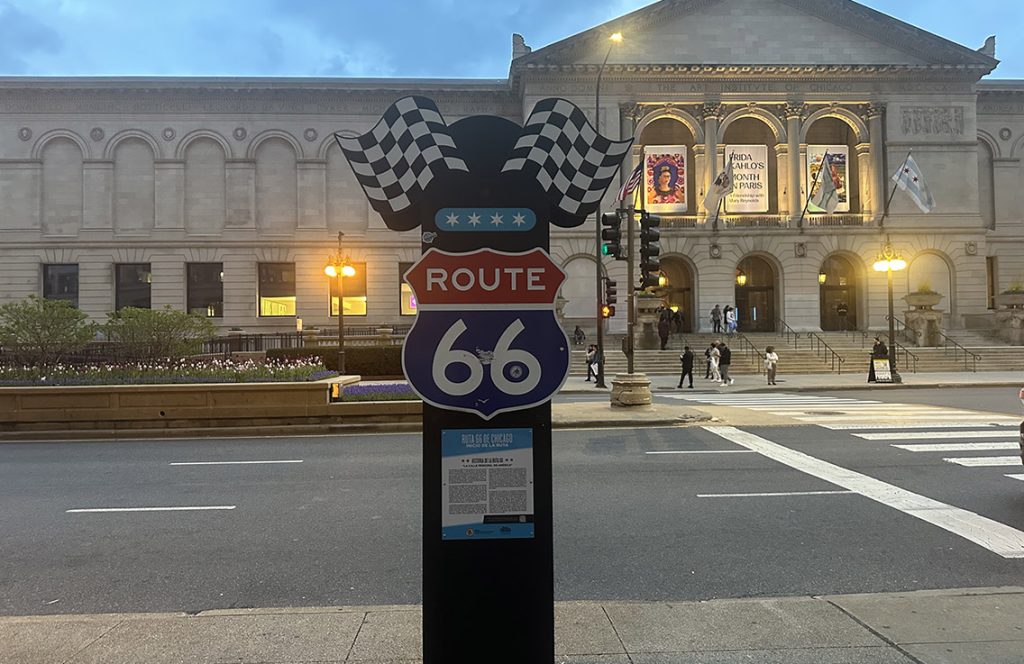
Chicago: “If you enjoy exploring historic buildings, discover Chicago’s remarkable architecture on a walking tour or river cruise.”
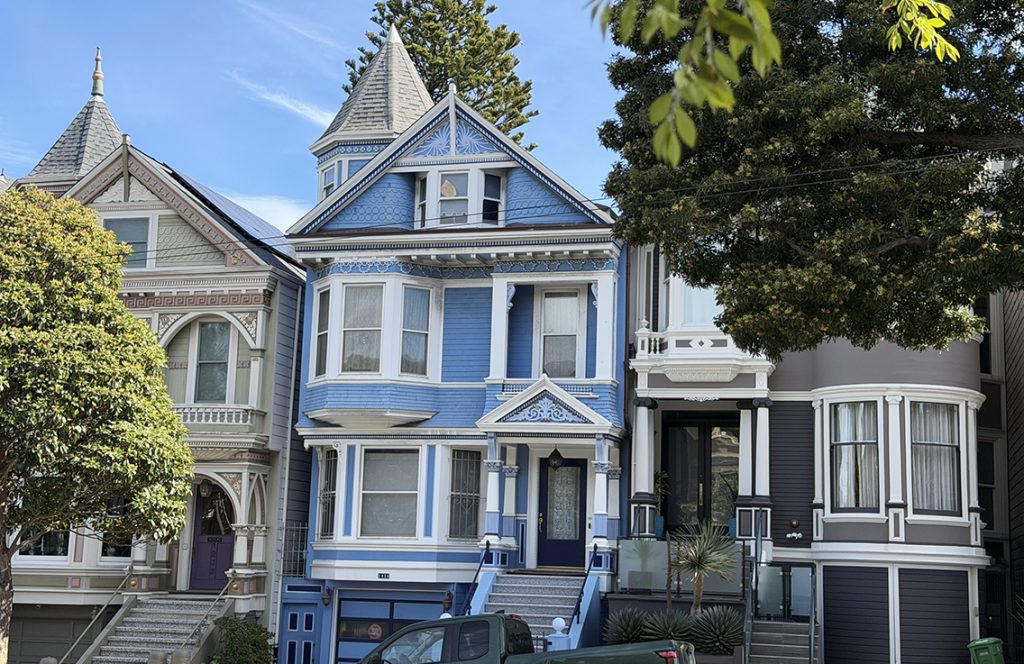
San Francisco: “Architecture lovers will also enjoy San Francisco’s colorful Victorian houses and historic neighborhoods.”

Santa Fe: “Compare Denver’s commercial architecture with the adobe buildings and Spanish Colonial heritage of Santa Fe.”

Washington DC: If you enjoy exploring historic neighborhoods and discovering architectural treasures, Washington, DC offers equally fascinating walking opportunities. Explore my guide to 14 Washington DC neighborhoods to discover charming streets, historic buildings, and hidden gems throughout the nation’s capital.
FAQs
Is downtown Denver safe for female solo travelers?
Downtown Denver is generally manageable for female solo travelers, especially during daylight hours in busy areas like LoDo and Union Station. However, use normal city precautions. Stay on well-traveled streets, remain aware of your surroundings, and avoid isolated areas after dark. I recommend completing this self-guided architecture tour during daylight hours. If exploring alone at night, consider using a rideshare service to return to your hotel.
How long does the Denver historic architecture tour take?
Allow approximately two to three hours to explore Denver’s historic downtown architecture. This gives you time to admire the buildings, take photographs, and read about their history. You can also stop for coffee or lunch along the route. Architecture enthusiasts may want additional time to explore the interiors of publicly accessible buildings.
What is the best time of year to visit Denver?
Spring and fall offer comfortable temperatures for exploring Denver on foot. September and October are particularly pleasant, with sunny afternoons and cooler mornings. Summer can be hot, especially during midday. Winter brings occasional snow and icy sidewalks. Regardless of the season, carry water, wear sunscreen, and dress in layers. Denver’s high elevation and strong sunshine can surprise visitors.
Can you explore Denver’s historic architecture without a guided tour?
Absolutely! Denver’s historic downtown is ideal for a self-guided architecture walking tour. Many significant buildings stand within walking distance of Union Station and the 16th and 17th Street corridors. You can admire Beaux-Arts, Chicago School, and Art Deco architecture without purchasing a tour ticket. Best of all, exploring independently lets you linger at your favorite buildings and discover unexpected architectural details.
What are the must-see historic buildings in downtown Denver?
Start at Denver Union Station, famous for its Beaux-Arts architecture and iconic “Travel by Train” sign. Continue toward the historic financial district to admire the First National Bank Building and Colorado National Bank Building. Don’t miss the Denver Gas & Electric Building, known for its elaborate white terra-cotta façade. The Buerger Brothers Building also deserves a stop for its colorful decorative tilework. Together, these landmarks reveal Denver’s architectural evolution during the early 20th century.

Final Thoughts
My Denver historic architecture tour tells the story of a city shaped by railroads, commerce, and ambitious entrepreneurs. From the grand Union Station to the ornate banks along 17th Street, each building reveals another chapter of Denver’s past.
My favorite part of this self-guided walking tour was discovering the architectural details hidden above street level. Colorful terra cotta, decorative cornices, and elaborate stone carvings reward visitors who take time to look up.
You don’t need a guided tour to appreciate Denver’s architectural treasures. Simply put on comfortable walking shoes and explore at your own pace. Whether you have a few hours or an entire day, downtown Denver offers a fascinating journey through history.
Have you explored Denver’s historic downtown? Share your favorite buildings or hidden architectural gems in the comments below!


10 Comments
Annie H
October 10, 2026 at 7:29 amThe title alone provoked a long-forgotten memory. It was 1978, and I was travelling around the States by Greyhound bus. My luggage had been ‘lost’ back in Columbus, Ohio, on the first night of the journey. In Denver, I caught a local bus. I can’t remember why – maybe just killing time waiting for the next Greyhound going west. The driver wasn’t happy about taking me – I was obviously not a local. Tourists should visit the best bits, he said. This bus goes through the worst bits. I said I didn’t mind – I wanted to see all of it. I had very little cash, no change of clothes, and the best bits, if I’d been able to afford them, wouldn’t have thought much of a young woman who had to wash in bus station rest rooms just to be a bit presentable.
Terri
October 10, 2026 at 10:03 amOh Annie what an experience! You joined thousands of young people who saw America on a Greyhound Bus pass. My dermatologist told me his parents gave it to him as a high school graduation gift. I traveled by Greyhound bus from Dickinson College to DC in 1977! I hope you had a little time to sightsee in Denver. You should write a blog post about seeing America on a Greyhound bus.
ANUKRATI DOSI
October 10, 2026 at 12:56 pmI love how exploring a city through its architecture can reveal so much more than its appearance. Buildings often hold stories of the people, ambitions, and changing times that shaped a place, and noticing these details can make even a simple walk feel like a journey through history.
Terri
October 11, 2026 at 6:58 amI agree!
Terri
October 17, 2026 at 5:31 pmI ALWAYS pause to admire architecture whenever I travel because I am obsessed lol!
Anita
October 10, 2026 at 2:27 pmI visited Denver a while back and really enjoyed the city. However, after reading your guide, I realised I missed many things during my visit. Thank you for sharing.
Terri
October 11, 2026 at 6:58 amDenver is a great city if you enjoy seeing historic architecture!
Sonia
October 10, 2026 at 3:14 pmWhile we live very close to Denver, we’ve missed a few of these buildings. Saving this for the next time we have a visitor in town who’d like to explore more of Denver’s history and architecture.
Terri
October 10, 2026 at 6:14 pmWell thank tou! This is a real compliment from a Colorado resident. I love your architecture.
Vanessa Whiteside
October 17, 2026 at 3:36 pmHi, Terry! It looks like you pause to appreciate architecture, like I do when I travel. I didn’t realize that Denver Union Station was so beautiful, and the Buerger Brothers Building looks magnificent.